
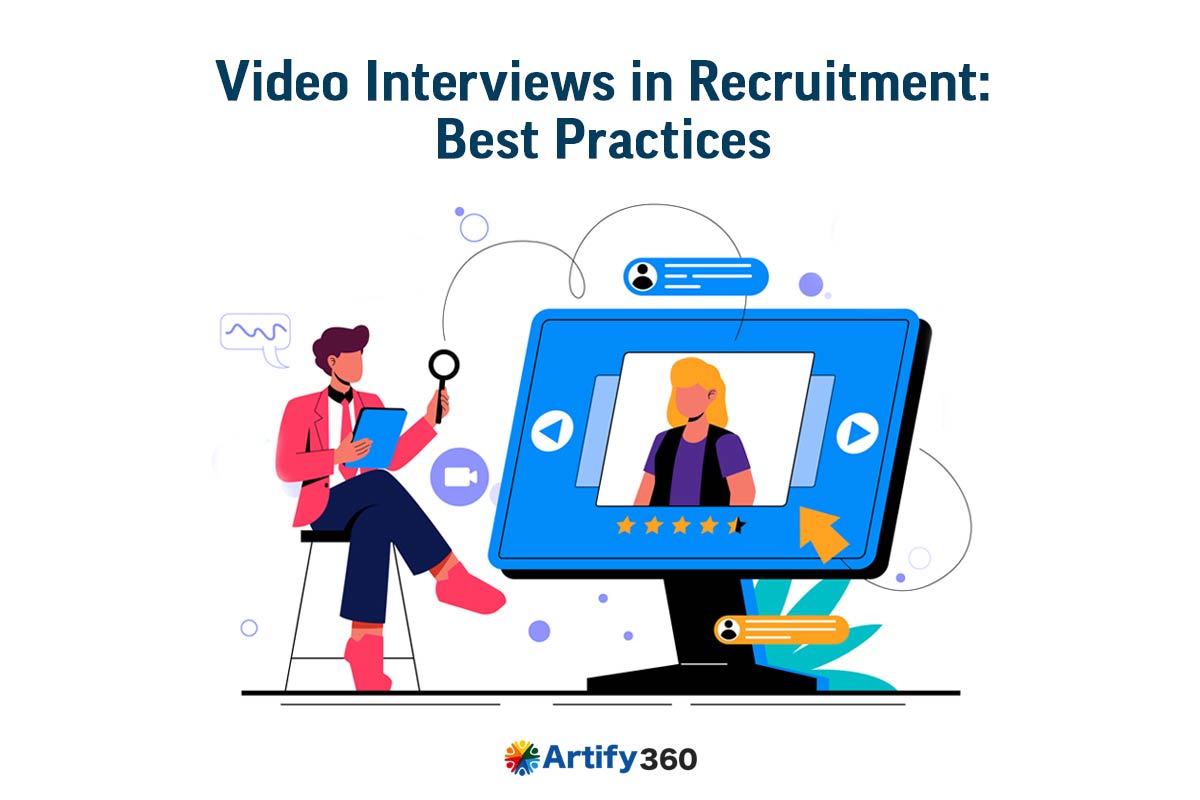
Video interviews have become an essential component of modern recruitment strategies. As organizations increasingly adopt remote and hybrid work models, HR teams are rethinking traditional hiring approaches to improve efficiency, accessibility, and candidate experience. Video interviews help businesses conduct structured, location-independent interviews while maintaining consistency and professionalism across recruitment stages.
This guide explores the purpose, benefits, and best practices of video interviews in recruitment. It also explains the difference between pre-recorded and live video interviews and highlights how an advanced HRMS can streamline the entire recruitment workflow.
What Is the Purpose of a Video Interview?
The primary purpose of a video interview is to enable remote, efficient, and scalable candidate assessment. Video interviews allow recruiters and hiring managers to evaluate candidates without geographical constraints, significantly reducing scheduling delays and recruitment costs.
Unlike traditional in-person interviews, video interviews support real-time evaluation of communication skills, professionalism, and role suitability. HR teams can assess both technical competencies and soft skills while maintaining flexibility for candidates. When integrated with an HRMS recruitment module, video interviews also support faster decision-making, centralized candidate tracking, and standardized evaluation criteria.
Benefits of Video Interviews in Recruitment
Implementing video interviews as part of recruitment best practices delivers measurable operational and experiential benefits.
Improved HR Efficiency
Video interviews reduce administrative overhead by eliminating travel coordination, venue planning, and repetitive scheduling efforts.
Time and Cost Savings
Organizations save on travel reimbursements, infrastructure costs, and interviewer time, accelerating the hiring cycle.
Wider Talent Pool
Remote video interviews enable access to global and diverse talent, supporting inclusive and scalable hiring strategies.
Better Skill Assessment
Live video interactions help recruiters observe communication style, problem-solving approach, and behavioral cues in real time.
Reduced Bias
Structured video interview formats and standardized questions help minimize unconscious bias during candidate evaluation.
Flexible Hiring Model
Both candidates and interviewers benefit from flexible scheduling, improving participation and interview completion rates.
Enhanced Candidate Experience
Clear communication, convenience, and faster feedback contribute to a positive candidate journey and employer branding.
Essential Tips to Conduct Effective Video Interviews
To maximize the value of video interviews, HR teams should adopt the following proven recruitment best practices:
Maintain a Professional Setup
Ensure a distraction-free environment with proper lighting, audio clarity, and a stable internet connection to maintain interview quality.
Prepare the Interview Environment
Interviewers should be well-prepared with structured questions, defined evaluation criteria, and role-specific expectations.
Support Candidates Proactively
Share interview guidelines, technical requirements, and platform instructions in advance to reduce candidate anxiety.
Use Reliable Technology
Choosing dependable video interview software ensures seamless connectivity, recording options, and interview documentation.
Align with Core HR Strategies
Integrate video interviews within your broader HRMS recruitment workflow to maintain consistency and data accuracy.
Reinforce Employer Branding
Use branded communication, standardized messaging, and professional conduct to reflect organizational culture and values.
Pre-Recorded Interviews vs Live Video Interviews
Understanding the differences between interview formats helps HR teams choose the right approach for specific hiring needs.
Timing and Flexibility
Pre-recorded interviews allow candidates to respond at their convenience, while live interviews require real-time availability.
Level of Interaction
Live interviews offer dynamic conversation and immediate clarification, whereas pre-recorded interviews are one-way.
Candidate Experience
Pre-recorded interviews provide flexibility, while live sessions offer stronger engagement and personal connection.
Pace and Evaluation
Live interviews allow real-time assessment and follow-up questions, whereas pre-recorded formats support standardized screening.
HR Best Practices to Manage Recruitment Video Interviews
To ensure consistency and fairness, HR teams should follow these best practices when managing video interviews:
Prioritize Candidate Experience
Clear communication, respectful scheduling, and timely feedback create trust and positive engagement from the start.
Ask Structured and Relevant Questions
Prepare competency-based and role-aligned questions to maintain professionalism and objectivity.
Promote Transparency
Clearly explain interview stages, evaluation criteria, and next steps to build candidate trust.
Automate Where Possible
Automation through video interview software and HRMS platforms improves efficiency, data tracking, and reporting accuracy.
Adapt to Individual Scenarios
Every candidate interaction is unique. A flexible HRMS supports both structured workflows and customized interview needs.
How Artify 360 Supports Video Interviews in Recruitment
Once organizations recognize the strategic value of video interviews, the next step is implementing the right technology. Artify 360 provides an integrated HRMS solution that supports modern recruitment workflows, including video interview-ready processes.
Artify 360 enables centralized candidate management, recruitment automation, and seamless coordination between HR teams and hiring managers. By integrating video interviews into a unified HR platform, businesses can reduce hiring time, improve candidate experience, and maintain structured recruitment practices.
Organizations can leverage Artify 360’s cloud-based HRMS to manage recruitment interviews efficiently while ensuring scalability, data security, and operational consistency.