
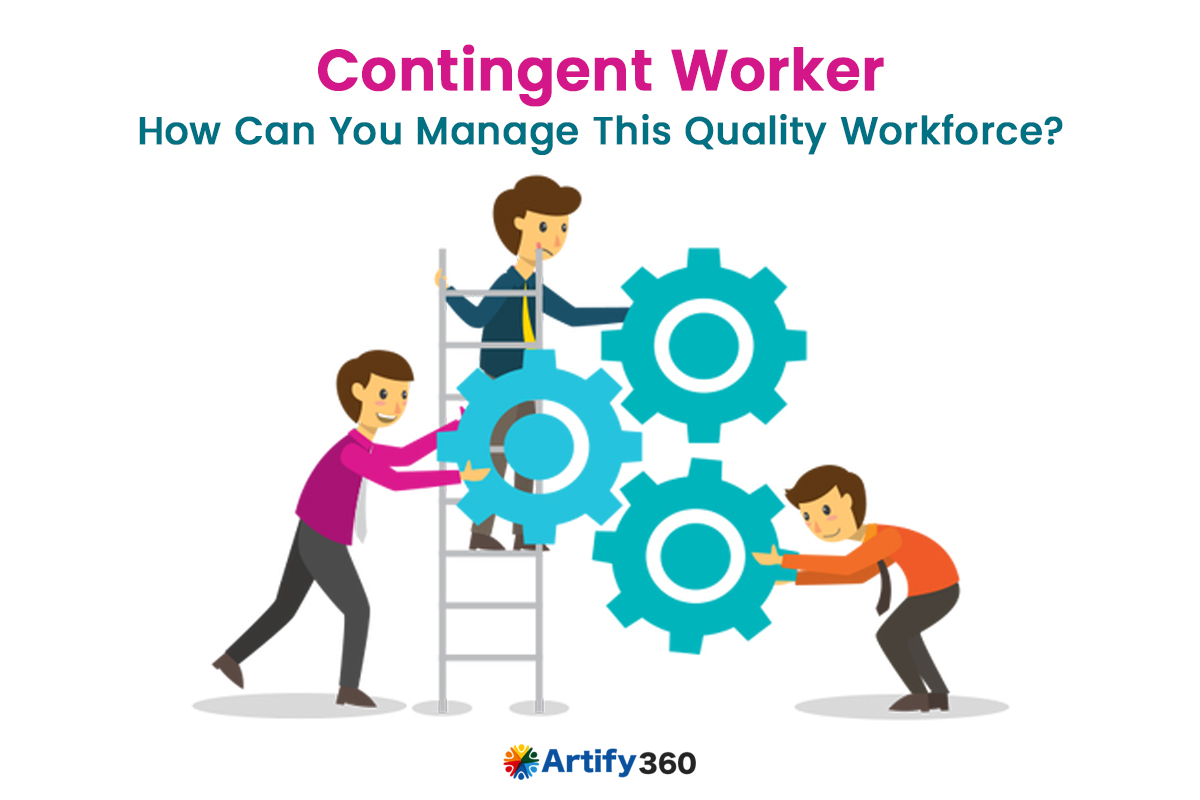
Your organization’s workforce and the way you manage it continues to be one of the most critical HR responsibilities. One major part of today’s workforce strategy is the growing use of the contingent workforce, which includes temporary employees, freelancers, independent contractors, gig workers, consultants, and other non-permanent external workforce roles.
A contingent worker is an individual hired on a temporary, project based, or contract basis. While they contribute significant value to your operations, they do not hold a permanent employment contract. This guide explores the definition, meaning, examples, benefits, challenges, and management strategies for contingent workers helping organizations understand how to optimize this flexible workforce model.
The content also highlights emerging trends, real-world use cases, and how modern HRMS platforms like Artify 360 support seamless contingent workforce management.
What Is a Contingent Worker?
A contingent worker is a temporary or non-permanent employee hired for short-term assignments, seasonal tasks, specialized projects, or contract-based work. Unlike full-time employees, contingent workers:
Do not have a permanent employment contract
Work based on specific deliverables, milestones, or project scope
Often operate as freelancers, consultants, project specialists, or gig workers
Are paid through contract terms instead of fixed salaries
This model is widely used across industries to access specialized skills, reduce labor costs, and manage fluctuating workloads.
Why Companies Use a Contingent Workforce
The demand for contingent talent is increasing due to:
Need for flexible staffing models
Workforce agility during business fluctuations
Access to specialized skills on-demand
Cost-effective resourcing
Reduced long-term employment commitments
Faster workforce scalability
How to Manage Your Contingent Workforce Effectively
Managing contingent workers requires a structured approach. Here are key guidelines:
1. Focus on Deliverables
Contingent workers operate based on deliverables, not fixed working hours. Align roles clearly with project timelines.
2. Set Clear Contract Terms
Since they do not receive typical employee benefits, compensation, responsibilities, milestones, and renewal terms must be defined in the contract.
3. Establish Workflow Visibility
Track work output, compliance, timelines, and productivity through a centralized system.
4. Balance Control and Flexibility
You have limited control compared to full-time employees, so align expectations clearly.
5. Build Scalable Resource Strategies
Use a workforce plan that integrates both core staff and contingent workers.
Current Trends in the Contingent Workforce
1. Increased Flexibility
Organizations increasingly prefer adaptable staffing models to optimize workforce demand.
2. Stronger Vendor Partnerships
Many companies work with staffing agencies, outsourcing vendors, and talent platforms.
3. Enhanced Workforce Visibility
Businesses use analytics to track contingent worker performance and compliance.
4. Digital & HR Tech Adoption
HRMS platforms provide tools for onboarding, attendance tracking, document management, and contract management.
5. Evolution of HR Operations
HR must adapt policies, compliance processes, and workflow strategies to support a mixed workforce.
6. Secure Procurement Systems
Confidential hiring and secure digital documentation help organizations bring in contingent talent safely and efficiently.
Benefits of Having a Contingent Workforce
- Reduced Risks
Contract-based hiring allows companies to scale up or down without long-term obligations.
- Cost Efficiency
Businesses save on full-time salaries, benefits, and training.
- Agile Operations
Workflows become flexible and adaptable to business needs.
- Better Resource Management
Organizations can allocate talent based on expertise and project priority.
- Increased Productivity
Specialized workers often contribute higher efficiency due to their niche skills
Challenges Organizations Face With Contingent Workers
1. Management Complexity
Handling contracts, schedules, and compliance can be harder without strong systems.
2. Adaptability Issues
Temporary workers may need time to adjust to your organization’s culture and workflow.
3. Strategy Execution Limits
They may not always align with long-term HR strategies.
4. Compliance Risks
Misclassification or improper documentation can cause legal issues.
5. Regulatory Challenges
Organizations must follow labor laws while maintaining operational flexibility.
Examples and Use Cases of Contingent Workforce
1. Creative Skill Experts
Designers, video creators, writers, and branding specialists.
2. Field Agents & Delivery Personnel
Logistics and operations teams for short-term needs.
3. Specialist Talent
IT professionals, HR consultants, finance experts, engineers, and more.
4. Innovation-Focused Roles
Tech developers, research specialists, and product consultants.
5. Job Consultancy & Advisory Roles
Recruitment partners and staffing consultants.
Manage Your Contingent Workforce With Artify 360
Effectively managing a modern workforce—especially one that includes temporary staff, contractors, and gig workers—requires clarity, control, and the right digital tools. Artify 360, a cloud-based HRMS and payroll platform, empowers organizations to seamlessly manage both full-time and contingent workers within a single system.
With features such as:
Contract and document management
Attendance and shift tracking
Automated payments and invoicing
Vendor and external workforce management
Real-time workforce analytics and dashboards
Smooth onboarding and offboarding workflows
Artify 360 helps HR teams improve visibility, enhance compliance, and streamline every stage of the contingent workforce lifecycle.
If you’re ready to simplify workforce operations and strengthen productivity, request a demo today to see how Artify 360 can transform your contingent workforce management.